




solution
Gross Pollutant Traps
A gross pollutant trap (GPT) – categorized as a ‘primary treatment device’, is the first line of defense in a stormwater treatment system and removes much of the bulky pollutants from stormwater runoff. Traditionally we find GPTs fending off litter, cigarette butts, plastic bottles, leaves and sediment. A strong, robust GPT plays a key role in ensuring ‘tertiary treatment devices’ like biofilters, raingardens and proprietary filters can ‘polish’ or clean the stormwater, removing an additional layer of particles and dissolved pollutants.

WHAT GROSS POLLUTANT SYSTEM WORKS BEST?
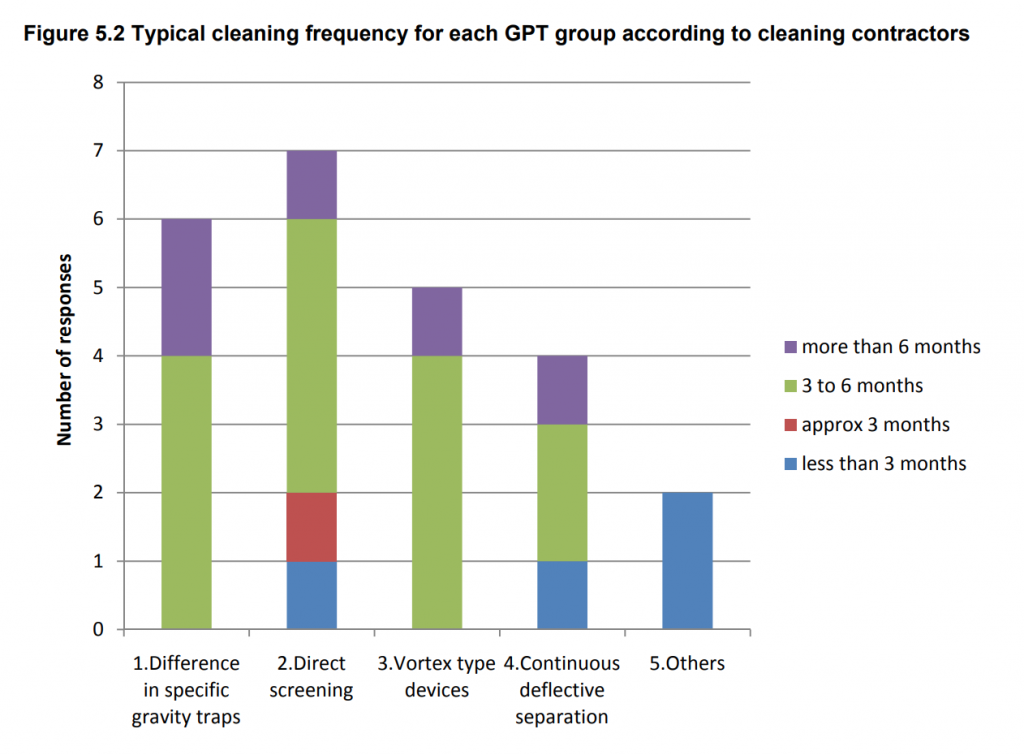
An interesting study was conducted by the CSIRO in 2010 surveying council employees and GPT cleaning contractors on their perception of different device types. Summarised in the graph below, the continuous reflective separation unit consistently rated higher in comparison to other GPTs on the market.
TYPES OF GROSS POLLUTANT TRAPS
There are several different GPTs in the market today – all removing gross pollutants from our stormwater system in different ways. Most GPTs fall into one of the below categories:
- Difference in specific gravity traps – systems which use gravity to separate pollutants that float and settle without the use of screens. Water quality is achieved by incorporating baffles/booms in a series of chambers.
- Direct screening – devices which incorporate screens in various orientations to manage the flow. These are not self-cleansing.
- Vortex type devices – devices that direct flow to produce vortices/hydrodynamic separation, but do not have a screen.
- Devices that combine a vortex or hydrodynamic separation with a non-blocking screening system – these are known as ‘continuous deflective separation’ units. The SPEL Vortceptor GPT is a vortex separation unit with a non-blocking screen system.

THE LAUNCH OF THE 'CONTINUOUS DEFLECTIVE SEPARATION' GPT
CDS Technologies pioneered the use of the ‘Continuous Deflective Separation’ GPT in Australia during the mid-90s. The rights were then acquired by Rocla Pty Ltd in 2007 allowing them exclusive patents to CDS GPT technology until 2015. These units were, and still are, housed in precast concrete segments. Once installed, they are reliable and councils benefit from the merit of their proven performance and reliability.
SPEL GROSS POLLUTANT TRAPS PRODUCTS
Highly engineered water quality devices, deployed directly into the stormwater system to capture contaminants close to the surface.
Concrete or fibreglass structures containing a series of sediment settling chambers separated by baffles.
Non-blocking hydrodynamic separator with a unique screen and treatment action, resulting in excellent pollution removal performance and high water quality outcomes.